Home
Services
Education
Learn More

Types of Sewer Lines and Materials
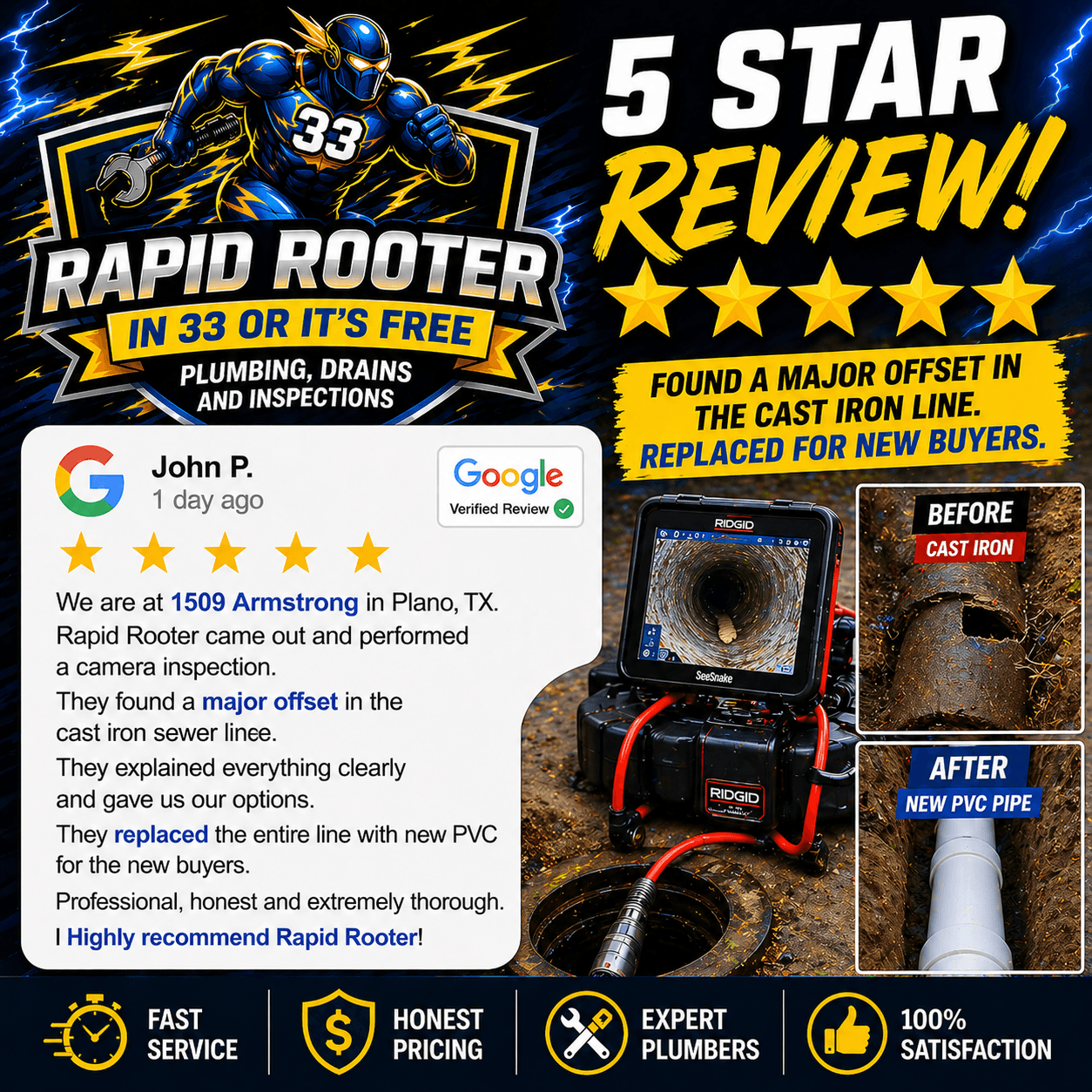
There are several types of sewer lines used in residential and commercial plumbing, each constructed from a range of materials. Common sewer line materials include PVC (polyvinyl chloride), cast iron, clay, and ABS (acrylonitrile butadiene styrene). PVC is lightweight, resistant to corrosion, and easy to install, making it a popular modern choice. Cast iron is durable and noise-resistant but can corrode over time. Clay pipes, though common in older systems, are fragile and susceptible to root intrusion. ABS is tough and rigid but less flexible than PVC. Each material has its own strengths—PVC and ABS excel in cost and ease of installation, cast iron is strong and long-lasting, and clay, while traditional, is now mostly used for spot repairs in legacy systems.
Cast Iron Sewer Lines
PVC Sewer Lines
PVC (polyvinyl chloride) sewer lines are the modern standard for most new residential and commercial installations. These pipes are highly durable, lightweight, easy to cut and install, and highly resistant to corrosion and chemical damage. Their smooth interior helps prevent clogs and maximizes flow. Common issues with PVC sewer lines include root intrusion at poorly sealed joints, cracking from improper installation or ground settling, and damage caused by heavy vehicles or aggressive drain cleaning. To keep PVC lines functioning well, perform regular inspections for signs of leaks or infiltration, avoid parking or placing heavy loads over known pipe runs, and always ensure joints and connections are properly sealed during repairs. Promptly address slow drains and blockages to minimize stress on the system. With routine care and immediate response to issues, PVC sewer lines can provide decades of reliable service.
How a Sewer Line Works in a Home
A home’s sewer line is a vital part of plumbing, carrying wastewater away from sinks, toilets, and appliances to the municipal sewer system or a septic tank. Pipes are typically sloped downward, allowing gravity to move the waste efficiently without the need for pumps.
Every fixture in your house connects to branch drain lines, which join the main sewer line. As water and waste travel through these pipes, vent pipes prevent pressure build-up and allow fresh air to enter, keeping everything flowing smoothly and preventing sewer gases from entering your home.
PVC Sewer Lines: Comprehensive Overview
PVC (polyvinyl chloride) sewer lines have become the most common choice for modern plumbing systems. These pipes are valued for being lightweight, easy to handle and install, and highly resistant to corrosion by wastewater and soil chemicals. The flexibility of PVC makes it less prone to cracking compared to brittle options like clay, and the joints are typically solvent-welded for watertight seals. However, improper installation can leave joints vulnerable to root intrusion and leaks. Common issues with PVC sewer lines include blockages from household debris or grease, joint separation from soil movement, and, rarely, surface cracking in cases of extreme temperature or improper backfilling. Maintenance is straightforward—avoid flushing foreign objects, refrain from using harsh chemicals, and arrange periodic camera inspections if you notice slow drainage. Prompt repair of any damage and professional cleaning help maintain performance. With proper care, PVC sewer lines can last 50 years or longer and remain a cost-effective, trouble-free solution for homes and businesses.
Services
Residential Plumbing
Commercial Plumbing
Emergency Repairs
Resources
FAQs
Educational Guides
Contact
Company
About Us
Careers
Privacy Policy